Monday, June 8, 2015

The Not So Wonderful Life of Zeke The Green Sea Turtle By: Erica Cisneros

The Not So Wonderful Life of Zeke
The Green Sea Turtle
By: Erica Cisneros

Hello,
Image result for green sea turtleMy name is Zeke and I am a Pacific Green Sea Turtle. I’m here to tell you a little bit about the lives of my friends and I. You may wonder where we get our name “green” well it’s not because I’m green, I know shocking. It’s actually because the color of our fat is green, yup you read right its green pretty cool huh? Our shells are actually a blend of different colors like brown, dark olive, gray, or black. We get to be quiet big too; I am a full grown male around 4ft long weighting 440Lbs. As adults our diets mostly consist of algae and sea grasses, but our baby hatchlings don’t really eat many veggies they love to eat that meat from insects to worms. Our population likes to stay in shallow water until breeding season comes around, then we travel long distances to find that special someone we will mate with. When nesting season comes around the girls travel back to the beaches from which they were born to lay their eggs in the middle of the night, they will do this every 3-4 years or so.                       
Image result for green sea turtle eggs

You may have seen us all around the world but we prefer to stay in tropical and subtropical waters. Because we migrate long distances for mating season and nesting season it is hard to pinpoint exact areas that we are located. Just to give you an idea of how hard it is, we have nesting sites in over 80 different countries. Over the years our numbers have gotten smaller and smaller, I notice less and less of my friends around breeding season, and not as many girls are surfacing to lay their eggs. I actually heard that in 2004 there was a Green Turtle assessment that showed a 48-65% decline in our numbers. As of 1978 we were listed as Threatened under the U.S. Endangered Species Act. As for my friends in Florida and the Pacific coast of Mexico, well they have it real tough they are listed as endangered. Meaning well they are a lot closer to being extinct then we are, hopefully we can all recover soon.

Life has been really hard for all of us; we can’t seem to catch a break anywhere, not in the ocean or on land. We face all types of threats that vary in severity from place to place. My buddies in Hawaii   are fighting a pretty bad disease called Fibropapillomas that is wiping many of them out. Over Guam there are huge threats to the females and our eggs, people are always taking them for food or other stuff. In the islands of American Samoa people are just taking over the entire area and they are making it really difficult for any of us to live there. We are no safer in the water a lot of us are drowning due to these huge fishing nets that are impossible to avoid. It’s getting harder and harder for us to survive and we need help
Image result for green sea turtle threatsImage result for green sea turtle threats
The great thing about this is that the humans are trying new things to help save us from extinction. Law enforcement is being increased to help prevent the direct take of our eggs and females nesting; they are even keeping feral animals away. More research is being done to help find ways to save us from entanglement and reduce the amount of debris in the ocean. They are investigating this debilitating tumorous disease to hopefully find a cure for us soon. There are many more things on this recovery plan that will help ensure our protection for years to come until our numbers are strong again, hopefully this will be enough.


Sources:
·        Images courtesy of Google Images


Saturday, June 6, 2015

Not Just Bambi's Mom


By Jonathon Chiu


Columbian White-tailed (CWT) Deer Image Source: Brian Tang (Flickr)
I. Description and Ecology of Organism
The Columbian white-tailed (CWT) deer, or Odocoileus virginianus leucurus, is endemic to the United States and is the western most subspecies of white-tailed deer throughout North America. In the Summer and Spring, their coat is exhibited to be red/brown and in the Winter it changes to grey. Only males have antlers that regrow yearly after shedding in the winters. Rutting, the breeding period, begins in November and lasts for almost a month. Gestation of does (females) lasts 9 months with fawning peaking i

II. Geographic and Population Changes
Early records have indicated that the CWT deer were numerous as populations use to range from the Cascade mountains to the Pacific and Pugat Sound,Washington, downward to the Umpqua River Basin in southern Oregon.  

There are two geographic locations in North America where the CWT deer currently inhabit: The Columbia River and Roseburg in Douglas County, Oregon. The Columbia River population estimates approximately 300 to 400 animals of which live along the lower river in Oregon and Washington. Many sub-populations exist within the Columbia River community, each separated from the next by a river channel or patches of unfavorable habitats. 
The Douglas County population of CWT deer is approximately 2,000 to 2,500. This population encompasses nearly 1,200 square kilometers (or 463 square miles) and are mostly found in riparian lands. The following image below shows the two populations of where the CWT deer exist.


Map of Oregon showing distribution of Columbian white-tailed deer
Columbian white-tailed deer potentially occurs in these Oregon counties for the Columbia River population and the Douglas County population (fws.gov)
III. Listing Date and Type of Listing
The CWT deer was federally listed as being endangered in June 1968
The Columbia River population status is still endangered.
The Douglas County population status was delisted in July 2013. 


IV. Cause of listing and Main threats to its continued existence
The CWT deer became endangered due to two reasons:

1. Habitat Degradation 
- farming
- logging
- commercial and residential Development

2. Overhunting and Poaching
CWT deer hunting is offered on 7,000 acres of private land in Douglas County, Oregon (Fisher Outfitters)

V. Description of Recovery Plan
The objective of the CWT deer recovery plan is to not only protect the habitat of the species, but to also take the species off the list of endangered species. This can be be accomplished by the following two objectives:

1. The recovery of the Columbia River population would require: maintaining the viability of 400 deers; the sub-population on Tenasillahe island must be at minimal 50 deers; and the securing of the habitat of one additional sub-population. Securing habitats can be accomplished through many methods which may include, but is not limited to: landowner incentives, zone ordinances,and involvement of private and public agencies. After the recovery of the CWT deer, there must be a long range plan to maintain the deer's secured status. Currently, the Columbia River population of the deer has been delisted. 

2. For the full recovery of the Roseburg population, the CWT deer must have a viable and minimal population of 500 deer distributed in 5,500 acres of secured habitat within he Umpqua Basin of Douglas County. This land must be owned, controlled, and dedicated to the conservation of the CWT deer. Methods of securing this habitat are similar to that described in the Columbia River population. Again, after the recovery of the Roseburg population, there must be long range management to secure its status. 

VI. References
1. Image: https://www.flickr.com/photos/hard-rain/158986693
2. http://www.fws.gov/oregonfwo/Species/Data/ColumbianWhiteTailedDeer/
3. http://animalstime.com/white-tailed-deer-facts-white-tailed-deer-habitat-diet/
4. "Revised Columbian White-tailed Deer Recovery Plan." Www.fws.gov. U.S. Fish and Wildlife Service, 14 June 1893. Web. <file:///C:/Users/Jonathon/Desktop/Deer%20Recovery%20Plan.pdf>.
5. http://www.fisheroutfitters.com/Columbian-White-Tailed-Deer-Hunting.php


By Jonathon Chiu

Columbian white-tailed deer -- Columbia River DPS
Odocoileus virginianus leucurus
Plan Date 06/14/1983
Plan Stage: RF(1)
Land Region: Pacific Region
Listed As: Endangered

The High Strung. The Unpredictable. The Comedic. Ocelot. By Camille Cherry.


Description
The ocelot (Leopardus pardalis) is a medium sized spotted cat that looks similar to a domesticated house cat. They can range in size from that of a large house cat up to almost to almost twice that size. Its coat has very distinct markings; black rosettes, spots, and stripes contrasted against the light yellow to reddish grey top coat and a white underside. In addition to the rosettes, spots, and stripes, the ocelot also has rings that trail down their tails. The ocelot generally weighs between 17 and 24 pounds, and gets no taller than two feet, and reaches lengths up to five feet. Like most felines, ocelots are carnivores, meaning they eat meat. They hunt smaller animals such as rodents, fish, snakes, birds, and even on occasion young deer.


Geographic Range and Population
The ocelot could once be found in parts of the central southern states in the U.S. all the way to South America. It could once be found in Arkansas, Louisiana, eastern Texas and Arizona, however, sadly, it has since been extirpated. Currently, the ocelot can be found in all countries south of the United States except for Chile, 21 countries in total. There are several populations that inhabit the southeastern corner of Texas.
The ocelot is a very secretive and nocturnal creature that inhabits areas of dense vegetative cover, making it very difficult to get an accurate estimation of population size. Based on research given in the Ocelot Recovery Plan, a study conducted in Texas reported several populations with a range of 5 to 14 adult males and 9 to 17 adult females, averaging 7 females and 12 males per population. Based on additional research given, adult male ocelots have an average range size of 10.5 km squared and the average adult female range was 6.5 km squared. When it comes to the total number of ocelots left in the world, according to The International Species Information Service, there are 217 worldwide, with 108 of them making up the populations in southeastern Texas. 

Listing Date and Type of Listing
Listing Date: 08/26/2010
Listed as: Endangered


Cause of Listing and Main Threats to its Continued Existence
The main cause of listing is habitat or range destruction and/or fragmentation. The ocelots range in the U.S. has drastically been reduced over the past two centuries. 95% of the dense thornscrub and 91% of native woodlands, both of which the ocelot inhabits, have been converted to agricultural lands since the mid-1900s. Another big cause of the ocelots decline in population is overutilization for commercial, recreational, scientific, and educational purposes. Ocelots were heavily exploited for their coats as well as importing for the pet trade in the ‘60s and ‘70s. Salvador Dalí had a pet ocelot named Babou that, according to an article written by Daisy Woodward, “acquired Babou in the 1960s, and for a time it was seen to accompany him, on a leash and stone studded collar, almost everywhere he went.”


Description of Recovery Plan
The objectives for the Ocelot Recovery Plan are as followed:
1) Assess, protect, and restore sufficient habitat to support viable populations of the ocelot
in the borderlands of the United States and Mexico (Listing Factor A).
2) Reduce the effects of human population growth and development on ocelot survival and
mortality (Listing Factors A,E).
3) Maintain or improve genetic fitness, demographic conditions, and health of the ocelot
(Listing Factors C,E).
4) Assure the long-term viability of ocelot conservation through partnerships, the
development and application of incentives for landowners, application of existing
regulations, and public education and outreach (Listing Factors A,D,E).
5) Practice adaptive management in which recovery is monitored and recovery tasks are
revised by the USFWS in coordination with the Recovery Team as new information
becomes available.
6) Support international efforts to ascertain the status of and conserve the ocelot south of
Tamaulipas and in Sonora (Listing Factors A,B,C,D,E).

Information and pictures found at:
http://www.anothermag.com/design-living/2472/salvador-dalis-ocelot
http://bigcatrescue.org/ocelot-facts/
http://www.wildcatconservation.org/wild-cats/south-america/ocelot/
http://revolutionaryecology.com/2013/12/06/endangered-ocelot-killed-by-capitalist-imperialist-car-culture/
http://www.fws.gov/endangered/species/recovery-plans.html, Ocelot, Leopardus pardalis

Friday, June 5, 2015

Dog That Runs in the Sea: Hawaiian Monk Seal

By: Haley Civello

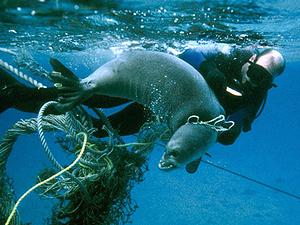
Ilio-holo-ikauaua, the Hawaiian phrase that describes the Hawaiian monk seal as the dog that runs in the sea. Currently, only 1200 seals remain near the Northwestern Hawaiian Islands and the Main Hawaiian Islands. Valiant efforts have been made over the past 20 years to preserve and restore the population, but not enough progress has been made to remove the Hawaiian monk seal from the endangered species list. The Hawaiian monk seal is currently the most endangered endemic marine mammal in the United States, as well as one of the most endangered marine mammals in the world. Their population has declined over 60% in the last 50 years. If the current recovery plan is not successful, we could lose them completely within the next 40 years.

Main factors in the endangerment of Hawaiian monk seals are:
- entanglement in fishing nets
- predation by sharks
- potential disease due to low population and limited geographic range
- disturbance from human interaction and habitat interference
- food limitation causing starvation and low survival rates in young

In order to effectively recover their population, full cooperation from federal, state, and private stakeholders is necessary. The goal for the recovery plan is to provide sufficient nutrients for young female seals, who are currently suffering the most. By preserving the young females, there is potential to recover the species. Without these females, the species would not make it.

Current Species Status: The Hawaiian monk seal has been on the endangered species list since 1976. They have a recovery priority number one due to the high magnitude of threats and high potential for recovery. There is big concern with their genetic diversity because of their limited population.

Habitat Requirements: Monk seals need land for pupping, nursing, molting, and resting. Sandy beaches are their primary source for these needs, but usually they use whatever is available. They spend 2/3 of their time in marine habitat. They search for food in a broad range of depths but their food source is limited, causing problems for survival, especially in females and pups.

Recovery Goal and Strategy: The goal for the monk seal is to restore their population so we can get them off of the endangered species list. The best way to do this would be to maintain current population, particularly of the young females; reduce susceptibility to disease and predation, intervene when necessary, and protect population from interaction with fisheries and potential human hazards. If female survival rates can be kept up, along with population sizes past a certain set point, the Hawaiian monk seal could be reevaluated for the classification of a threatened species.
Sources:
http://ecos.fws.gov/docs/recovery_plan/hawaiianmonkseal.pdf
http://www.marine-conservation.org/what-we-do/program-areas/mpas/pacific-islands-conservation/hawaiian-monk-seals/
http://www.monachus-guardian.org/factfiles/hawai01.htm
http://kahea.org/issues/ocean-protection/hawaiian-monk-seals

Save the Sea Turtles! (Stephanie Carl)


http://www.compasscayman.com/observer/2012/08/12/Tracking-hatching-turtles/

http://nsbturtles.org

Loggerhead sea turtles are an endangered species and it is our job to try and spread the word in order to help save them!

Description, Ecology, Population and Geography:

Loggerhead sea turtles (caretta caretta) eat small marine animals such as mollusks, fish and crustaceans. Adult loggerhead sea turtles, on average, grow to be about 200 lbs and 3 feet long. They have a very wide range and can be found as far as hundreds of miles out to sea or as close as a nearby bay. They tend to prefer temperate and tropical areas in the Atlantic, Pacific and Indian Ocean. The two most populated nesting areas, with over 10,000 nesting females each year, occur in southern Florida and Masirah, Oman. Nesting occurs between April and September and a female sea turtle may nest up to 7 times in one nesting season. Most nesting occurs in  the western rim of the Atlantic and Indian Oceans. In the US they nest in areas ranging from Virginia all the way to Texas. In the US the total amount of nests each year has shifted between 47,000 and 90,000 for the past two decades.

http://www.enchantedlearning.com/subjects/turtle/Seaturtlecoloring.shtml
http://marinebio.org/species.asp?id=163

http://seaturtleexploration.com/wp-content/uploads/2014/05/Life-Cycle-Of-A-Sea-Turtle-from-kingfisherbayresort.blogspot.com.jpg
To see where loggerhead sea turtles live in the US, click the link below...

http://ecos.fws.gov/speciesProfile/profile/speciesProfile.action?spcode=C00U

So WHY are they endangered...

As of July 28, 1978 loggerhead sea turtles have been considered an endangered species. On September 22, 2011 their classification was broken up into nine district population segments with four of them considered as threatened and five of them considered to be endangered. The endangered areas are The Northeast Atlantic Ocean, the Mediterannean Sea, North Pacific Ocean, South Pacific Ocean and North Indian Ocean. These areas are prone to the threats that currently pose problems for sea turtles including "bottom trawl, pelagic longline, demersal large mesh gill net fisheries, legal and illegal harvest, vessel strikes, beach armoring, beach erosion, marine debris ingestion, oil pollution, light pollution and predation by native and exotic species."

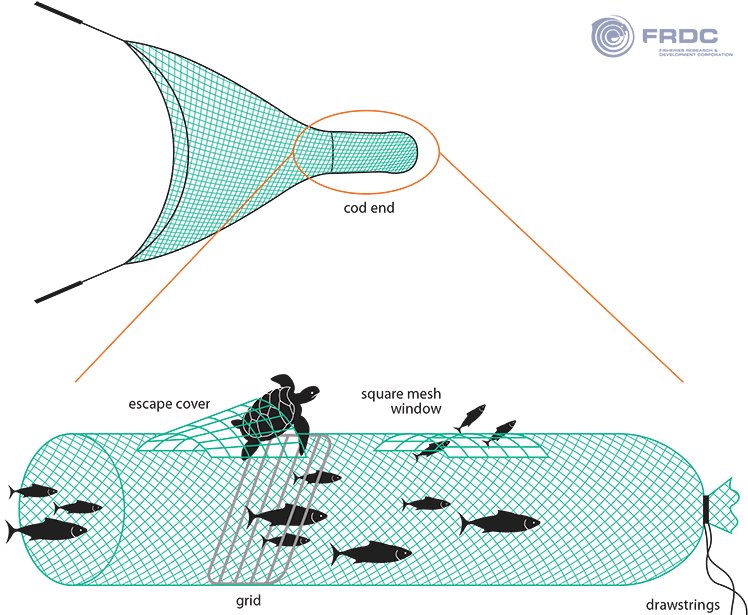
Some action that has been taken to reduce these problems are the implementation of TEDs (turtle exclude devices and lighting ordinances to reduce hatchlings from becoming disoriented and allowing them to make it safely from the nest to the water.

Turtle Excluder Device
http://fish.gov.au/fishing_methods/Pages/bycatch_reduction_devices.aspx

Recovery Plan

The recovery plan for the loggerhead sea turtles, established in 1998 and revised in 2008, focuses on five recovery units. Each recovery unit encompasses a specific area of nesting grounds for the Northwest Atlantic loggerhead population. There is evidence that shows there is a long term decline in nesting in these areas. For example, in the Northern Gulf of Mexico Recovery Unit there is a declining trend of nesting by 4.7% annually. The goal of the recovery plan is to implement strategies and foster cooperation amongst national and international organizations to reduce and ultimately eliminate the major threats that are facing sea turtles. Some of these strategies include monitoring trends on nesting beaches and minimizing bycatch by using TEDs.

What can you do?

5 Ways to Protect Sea Turtles


 Works Cited
"Loggerhead Sea Turtle (Caretta Caretta)." Environmental Conservation Online System. US Fish and Wildlife Service, n.d. Web. <http%3A%2F%2Fecos.fws.gov%2FspeciesProfile%2Fprofile%2FspeciesProfile.action%3Fspcode%3DC00U>. 
"Loggerhead Sea Turtle (Caretta Caretta)." Listing Status and Biological Information of Loggerhead Sea Turtles. N.p., n.d. Web. 06 June 2015. <http://www.fws.gov/northflorida/seaturtles/turtle%20factsheets/loggerhead-sea-turtle.htm>. 
Loggerhead Sea Turtle. Hartford: Connecticut Dept. of Environmental Protection, Wildlife Division, 1993. Web.


Thursday, June 4, 2015

Pygmys Come In Small Packages


Image taken from zooborns.com posted on October 14, 2009

Published by: Ariq Chowdhury


ECOLOGY
Apart of the Leporidae (hare) family, the pygmy rabbit is scientifically referred to as the Brachylagus idahoensis species and has no recognizable subspecies. It is also one of the only known rabbit species to dig its own burrow. They use these burrows to escape from predators. Pygmy rabbits are most active during dusk and dawn and typically have a lifespan of 3-5 years. They have a short breeding season and can begin reproduction the year after birth (fws.gov).

DISTRIBUTION
The Pygmy Rabbit is the smallest rabbit in North America and has been residing in the western United States for the past 100,000 years (wa.gov).The local distribution of pygmy rabbits shifts depending on weather conditions within their patchy habitat. Historically, they range from the Columbia Plateau to the Great Basin encompassing several states such as Washington, Idaho, California, Wyoming, and Nevada. Particularly, the Columbia Basin population in Washington has been isolated from its normal species range for over 10,000 years resulting in a drastic reduction in biological fitness from a loss of genetic diversity (nwf.org).

Columbia Basin in Washington: Image taken from wikimedia
Photo from the Oregon Zoo: Image taken from oregonzoo.org
THREATS
According to the United States Fish and Wildlife Service, the Washington population of pygmy rabbits exhibits significantly less genetic diversity than those existing outside of isolation. As a result, the pygmy rabbits suffer from an inbreeding depression. This decreases their genetic diversity and makes them highly susceptible to disease nearly causing them to go extinct in 2001. The Washington population of pygmy rabbits were fully listed as an endangered species in March, 2003 under the Endangered Species Act. They live in tall, dense sagebrush that is crucial for their survival for it provides both food and shelter. Dense sagebrush is also used as a corridor between core areas for the rabbits to travel through. Unfortunately, European settlement has disrupted this flow by converting their habitat for agricultural and grazing purposes (fws.org)
Habitat loss and fragmentation is the leading threat of the pygmy rabbit and has caused the greatest decline in their population levels. For the past 160 years, their sagebrush habitat has been converted to agricultural use, development, and livestock. This fragmentation disrupts their dispersal patterns from the loss of corridors. Other threats include widespread disease, frequent wildfire, and constant predation. It is important that they have plenty of shrub-cover and loose soil to provide a burrow-escape for any avian predators. Common predators include coyotes, badgers, weasels, and ravens that like to feed in sagebrush-steppes (wdfw.wa.gov).

RECOVERY PLAN
Luckily, an elaborate recovery plan for the Washington population has been amended in 2001. Below is a list of the main actions taken. For a more extensive description of the plan click here.
  • First, monitor the Columbia Basin rabbits to record population trends and occurrences.
  • Protect the rabbits by reducing potential wildfires, setting restrictions on vehicular access, and establishing burning permit rules. If necessary, reduce predation to keep the rabbit population from declining. 
  • Manage their habitat by maintaining their resources and establish other habitats to start new populations. 
  • Negotiate with landowners and public agencies to inform and manage their grazing practices and provide alternative actions in an attempt to spare the pygmy population.
  • Contact managers within the pygmy vicinity to inform them of common management measures that directly affect this endangered species. Lastly, set up education programs to spread awareness and help inform the community. 
Without the combined support and proper management, all these efforts would go in vein. With a well-informed and supporting community, the small pygmy rabbits still have a chance in this big competitive world.

Pygmy Rabbit sagebrush habitat in Washington's Columbia Basin: Image taken from taichicenter-chicago.com

SOURCES
          http://www.fws.gov/policy/library/2003/03-5076.html
          http://wdfw.wa.gov/conservation/pygmy_rabbit/
          http://www.nwf.org/News-and-Magazines/National-Wildlife/Animals/Archives/2013/Return-of-the-Mighty-Pygmy
          http://www.fws.gov/nevada/nv_species/pygmy_rabbit.html
          http://www.westernwatersheds.org/issues/species/pygmy-rabbits/
          http://evolution.berkeley.edu/evosite/relevance/IIIA1Inbreeding.shtml